Trade Mindfully – Dr. Gary Dayton

Get the Trade Mindfully Course for $459 $12
The Size is 3.53 GB and is Released in 2025

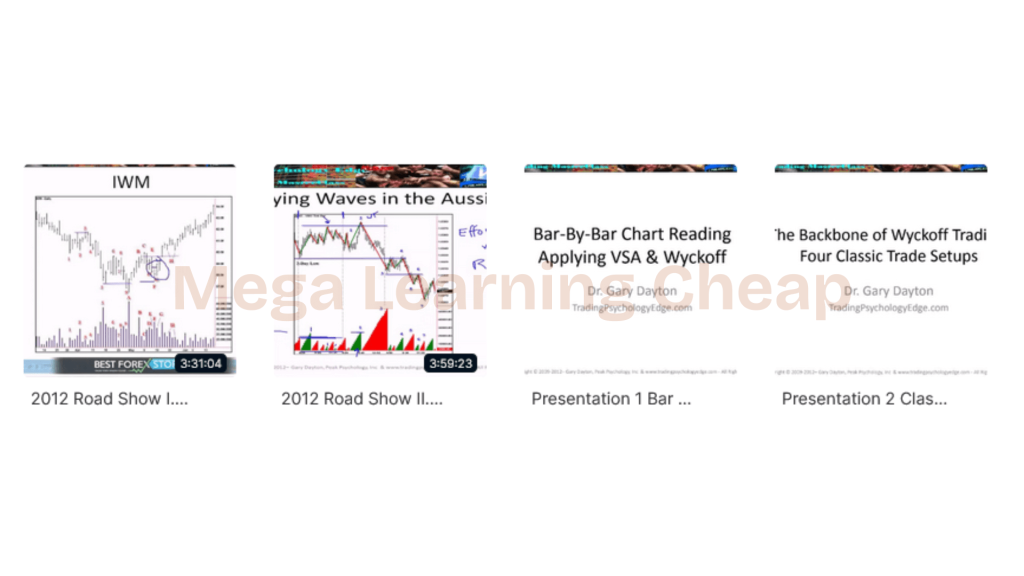
You’ll trade better when you train your mind and your method together. In Trade Mindfully, Dr. Gary Dayton blends mindfulness, Wyckoff tape reading, and deliberate “deep practice” to sharpen execution and manage bias. You’ll calm reactivity, spot fear, loss aversion, and recency effects, and read price/volume—using tick volume—to gauge supply and demand bar by bar. Expect practical drills, bar narration, and coaching options that build real skill. If you want steadier decisions and clearer entries, you’re in the right place.
The Psychology Behind Successful Trading
Even before you study charts or earnings reports, your mind sets the stage for every trade. You bring tendencies that can help or hurt. Loss aversion nudges you to protect small gains and avoid small losses, pushing you to exit winners too early or hold losers too long. The recency effect skews your expectations, making the latest move feel like the new normal. Heuristics compress complexity into shortcuts, but in markets, oversimplification invites errors.
You perform better when you notice these biases and name them. When fear or anxiety spikes, you don’t suppress it; you acknowledge it and examine what it’s trying to make you do. Ask: What evidence supports this move? What contradicts it? Slow down just enough to test your thesis against broader context—trend, volume, catalysts—before acting. By recognizing emotional pulls and interrogating your decision process, you replace reactive impulses with deliberate choices, improving consistency and protecting your edge.
Mindfulness as a Performance Edge
You’ve already seen how naming biases steadies your decisions; mindfulness turns that awareness into a repeatable edge. Rooted in yogic and Buddhist practice, mindfulness sharpens focus and keeps you calm when markets heat up. By staying present, you sidestep mental blind spots and act on what’s actually happening, not what you fear. You learn to notice thoughts and feelings as passing events—useful signals, not commands—so past losses, open P&L, or future worries don’t hijack execution.
Practice is simple and practical. Use breath awareness to settle attention before the open. Run short focus drills to reset between trades. Add brief meditations to widen attention and reduce reactivity. With repetition, you respond to volatility with clarity, not impulse.
- Notice, name, and normalize: “Tension in chest; fear thought,” then refocus on price and plan.
- Set pre-trade anchors: three breaths, intention, key levels.
- Debrief mindfully: review actions, note triggers, refine routines.
Understanding and Applying the Wyckoff Method
You’ll start by grounding your process in core Wyckoff principles: read price and volume bar-by-bar to locate accumulation, distribution, markup, and markdown. In FX, use tick volume—its 90%+ correlation with actual volume lets you track supply and demand reliably. Then apply tape reading to spot shifts in effort vs. result and set rules for entries, exits, and risk.
Core Wyckoff Principles
At its core, the Wyckoff Method teaches you to read the tape—price and volume—so you can align with the real forces moving markets. You focus on supply and demand instead of lagging indicators. Wyckoff’s three laws guide you: Supply and Demand shows who’s in control; Cause and Effect links the size of a trading range to the potential move; Effort vs. Result compares volume (effort) to price progress (result) to spot subtle shifts.
Related Posts


You also map market phases—accumulation, markup, distribution, markdown—to locate trend births and endings. In FX, you use tick volume as a robust stand-in for actual volume, which correlates well with traded activity.
- Decode control: buyers or sellers?
- Judge potential from range “cause.”
- Validate moves with effort versus result.
Tape Reading Applications
While indicators lag, tape reading puts you in the now—bar by bar—so you can judge supply and demand as they shift. Using the Wyckoff Method, you read price and volume together to spot effort versus result: wide spreads with rising volume show conviction; narrow ranges on heavy volume warn of absorption. In FX, you can rely on tick volume—its 90%+ correlation with actual volume makes it a practical proxy.
Apply this to phases. During accumulation, look for stopping action, tests, and higher lows. In markup, track pullbacks with contracting volume. In distribution, note upthrusts and failed demand. In markdown, expect weak rallies on light volume. Practice in Deep Practice sessions: replay charts, log hypotheses, compare outcomes, and refine entries and exits in real time.
Managing Fear, Loss Aversion, and Recency Bias
Though markets tempt quick reactions, managing fear, loss aversion, and recency bias starts with noticing how they distort your judgment. You feel losses 2–2.5 times more intensely than gains, so you’re prone to snatch profits early and let fear drive exits. Recency also tricks you: a hot streak fuels overconfidence; a drawdown breeds hesitation. Mindfulness helps you pause, observe these impulses without judgment, and return to your plan.
Acknowledge your patterns. Name the fear when it arises—tight chest, racing thoughts, urge to click out—and you’ll create space to choose a better response. Align decisions with predefined risk, not your last trade’s outcome. Track trades to see the bias, not just the P&L.
- Define entries, exits, and risk in advance; execute the plan, not the feeling.
- Use brief breathing breaks to reset attention before and after trades.
- Review sequences of trades weekly to spot loss aversion and recency effects.
Heuristics: When Mental Shortcuts Mislead Traders
Even when speed matters, mental shortcuts can steer you wrong. Heuristics help you act fast, but markets are complex, and simplicity can mislead. When you compress messy data into a neat story, you risk errors that cost real money.
The recency effect is a prime trap. You overweight the latest rally or selloff and treat it as the whole picture. But recent price action may be noise, not signal. Similarly, familiar patterns feel safe. You default to what worked before, grow complacent, and miss critical shifts in liquidity, correlations, or macro drivers.
Heuristics also swap hard questions for easy ones. Instead of asking, “What’s the market’s underlying structure?” you ask, “Does this look like the last breakout?” That substitution breeds superficial reads and biased decisions.
You can do better by noticing when speed replaces depth. Pause, widen your sample, check multiple timeframes, and confront disconfirming evidence. Awareness reduces costly mistakes.
Deep Practice: Building Real Trading Mastery
A deliberate path to mastery beats scattered effort. In Deep Practice, you simplify Wyckoff’s complexity by breaking it into focused reps. You engage actively with price behavior, not passively with theory. You practice bar-by-bar analysis, observe market actions, and refine decisions in tight feedback loops. Each session builds pattern recognition and strengthens your execution under pressure.
Weekly Deep Practice keeps you improving. You’ll study your trades, notice emotional triggers, and apply mindfulness to stay present. Instead of reacting, you regulate attention, let distractions pass, and return to the chart. This disciplined loop—analyze, act, review—accelerates true skill.
With lifelong access to resources, you can revisit lessons as markets evolve. You’ll adapt methods to shifting conditions and keep sharpening your edge without starting over.
- Learn Wyckoff through focused reps that turn concepts into usable skill
- Strengthen bar-by-bar judgment and align actions with objective reads
- Use mindfulness to reduce noise, sustain focus, and execute cleanly
Tape Reading Bar by Bar With Tick Volume
You’ll anchor your tape reading with tick volume correlations that track real volume remarkably well, even in FX. By reading each bar’s open, high, low, close, and ticks, you’ll spot shifts in effort versus result and see where price is likely to move next. Bar-by-bar insights sharpen your sense of market intent so you can act with speed and confidence.
Tick Volume Correlations
While FX lacks a central exchange and reported volume, tick volume gives you a reliable proxy for participation by counting price changes per bar—and it correlates with actual volume over 90% of the time. You can apply this Wyckoff-based insight to gauge how intensely buyers or sellers are pressing. When tick volume expands with directional movement, participation likely confirms the move. When price pushes but tick volume contracts, the effort may be fading.
Use tick volume to read supply and demand imbalances. Rising volume on declines often signals supply; rising volume on rallies often signals demand. Flat or falling volume can warn of exhaustion. By pairing price action with tick volume, you’ll refine your judgment and make more informed decisions.
- Spot strengthening or weakening participation fast
- Validate or question apparent momentum
- Frame risk with clearer context
Bar-By-Bar Insights
Tick volume gives context; bar-by-bar tape reading turns that context into actionable detail. Using Wyckoff principles that Dr. Gary Dayton clarifies, you read each bar’s spread, close, and tick volume to see supply and demand in real time. In FX, tick volume stands in for actual volume with strong correlation, so you can assess effort versus result on every bar.
Look for wide spreads with rising ticks and closes near highs to confirm demand; narrow spreads with falling ticks after an upmove suggest absorption. A down bar on expanding ticks that can’t break support signals selling met by buying. Strings of narrow bars with drying ticks often precede expansion. Practice daily: narrate each bar, note context, anticipate tests, and align entries with emerging trend and strength.
Training Options: Courses, Membership, and Coaching
Because trading success demands both skill and mindset, Trade Mindfully offers three complementary training paths: focused courses in Wyckoff tape reading and trading psychology, flexible membership plans with live sessions, recordings, and ongoing resources, and private coaching for one-on-one mental skill development. You choose the mix that fits your goals and schedule, then apply what you learn directly to your trades.
Courses give you structured, practical instruction with lifelong access, so you can revisit material anytime the site’s active and reinforce edge-building behaviors. Membership keeps you engaged with live meetings, recorded archives, and Weekly Deep Practice sessions that sharpen execution and emotional awareness. If you want tailored guidance, private coaching helps you build mental skills for consistent peak performance through a personalized plan.
- Master Wyckoff tape reading and integrate psychology into entries, exits, and risk.
- Use live sessions and recordings to refine decisions across market conditions.
- Build durable mental habits with targeted, one-on-one coaching.
Tools and Resources for Ongoing Skill Development
Even as markets change, you can keep sharpening your edge with a toolkit built for sustained growth. Start with Trade Mindfully’s on-demand courses in Wyckoff tape reading and trading psychology; you’ll retain access for as long as the site remains active, so you can revisit key concepts as your skills evolve.
Use private coaching to target mental skills that drive consistent performance. Sessions personalize your education, helping you spot cognitive traps, structure routines, and apply mindfulness under pressure. Then, cement gains in Weekly Deep Practice. These sessions push deliberate repetition, deepen your grasp of emotional dynamics, and convert theory into executable habits.
Gauge progress with the interactive quiz. It highlights strengths, reveals blind spots, and directs your next study block, keeping your development intentional. Throughout, Dr. Gary Dayton’s methods integrate psychology and mindfulness, giving you practical tools to regulate arousal, recover from setbacks, and make clearer decisions—so improvement compounds, week after week.
Frequently Asked Questions
How Does Dr. Dayton Suggest Structuring a Daily Pre-Market Routine?
He suggests you start with a brief mindfulness session, center your breath, and set clear intentions. You then review higher-timeframe trends, key levels, and overnight news. You define scenarios, triggers, and if-then plans, including invalidation points. You visualize executing calmly, rehearse managing risk, and set a maximum loss. You write a simple checklist, confirm readiness, and do a quick body scan. Finally, you commit to process goals, not P&L.
What Journaling Format Does He Recommend for Tracking Emotional Triggers?
He recommends a simple two-column journal: left for objective market events, right for your internal experience (thoughts, feelings, urges, body sensations). Start each entry with a trigger label, intensity (0–10), and action you took. Add a brief “if-then” plan for next time. Here’s the hook: traders who journal daily improve performance by up to 20%. You’ll spot patterns fast, separate signal from noise, and reduce impulsive trades.
Are There Specific Breathing Exercises Timed to Trading Sessions?
Yes. You can use brief, timed breathing drills before, during, and after sessions. Pre-open: 3 minutes of box breathing (inhale 4, hold 4, exhale 4, hold 4). During trading: 1-minute reset every hour—inhale 4, exhale 6 to downshift arousal. After a loss or spike: 5 slow breaths, exhale longer than inhale. Post-close: 5 minutes of paced breathing at 6 breaths/min to debrief and restore balance.
How Does He Advise Handling Trading Around Major News Events?
He advises you to avoid impulsive trading during major news events. You prepare beforehand: note the release time, define your risk, and decide whether you’ll stand aside or reduce size. You create if-then plans for likely scenarios and rehearse them. During the event, you slow your breath, observe your arousal level, and wait for post-news structure to form. You act only when your setup appears, accept slippage, and honor stops without debate.
What Metrics Track Progress in Psychological Resilience Over Months?
Track resilience with a weekly composite: journal emotional intensity (0–10), recovery time after setbacks, rule adherence rate, and frequency of impulsive trades. Add heart rate variability or morning mood check for baseline regulation. Measure pre-trade routine completion, sleep quality, and perceived control (Likert scale). Review win/loss after stressors, not overall P&L. Graph trends monthly, set small targets (e.g., 10% fewer impulse trades), and run brief post-mortems to refine coping strategies.
Conclusion
So you want to trade mindfully? Perfect—because nothing screams success like noticing your breath while the market yanks your stops. You’ll apply Wyckoff like a wizard, outwit heuristics you swear you don’t have, and read tape tick-by-tick as if ticks write sonnets. You’ll love losing fear, loathing loss aversion, and actually practicing. Then you’ll join training, use tools, and—shockingly—stick with a plan. Keep showing up. Mastery’s boring, profitable, and far less dramatic than your inner narrator.